Patient Support
Find an ACES participating practice for urgent eyecare support
Check eligibility and learn more about locally commissioned services
Find services and important contacts for people experiencing sight loss
Check eligibility and learn more about locally commissioned services
Urgent Eyecare
What is Aces?
ACES is an NHS funded service available to all patients registered with a Somerset GP. The service provides patients experiencing recently occurring medical eye conditions with appropriate treatment closer to home. The service is provided by local optometrists with the specialist knowledge and skills to carry out this work at a locally approved opticians.
Medical eye conditions which can be treated by ACES
The service is designed for recently occurring medical eye conditions such as:
Sudden or recent reduction in vision in one or both eyes
Red eye(s) or eye lids
Pain and /or discomfort in the eyes, around the eye area or temples
Recent onset or sudden increase of flashes and/or floaters in one or both eyes
Mild trauma, for example a scratch to the outer surface of the eye(s) or lid(s)
Suspected foreign body in the eye
Recent onset of double vision
Significant recent discharge from or watering of the eye
If you are unsure whether your symptoms qualify, please contact one of the approved opticians who can advise you
How do I access ACES?
Below is a list of approved opticians. Please be aware that your normal optometrist may have chosen not to offer this service. You can contact any of these approved opticians directly (self refer) to make an appointment and ask to be seen under ACES.
Appointments are available during normal working hours and you will be seen within 24 hours.
Alternatively, if you make an appointment to see your GP, he or she may refer you to the optometrist for treatment.
What happens when I see the optometrist?
The optometrist will discuss your eye history, any symptoms you may be experiencing and any related medical history.
You will receive an eye assessment relevant to your symptoms.
Please take a list of all current medications and your up to date glasses with you to the appointment. As a result of the consultation you may be:
Given appropriate treatment by the optometrist, this may include a follow-up appointment
Referred to your GP for appropriate treatment if your eye condition is related to your general health
Referred directly to the hospital eye service if your eye condition is more serious
Following your appointment the optometrist will notify your GP about the outcome of your consultation in order to ensure your medical records are updated.
Other NHS Services
-
Eye tests are important because they can:
Detect changes in your vision
Identify early signs of eye conditions
Sometimes pick up signs of general health problems (such as diabetes or high blood pressure)
NHS Sight Tests – Who is eligible?
You may be entitled to a free NHS sight test if you:
Are under 16
Are 16, 17 or 18 and in full-time education
Are aged 60 or over
Receive certain benefits (such as Universal Credit, Income Support, or Pension Credit)
Are registered as partially sighted or blind
Have been diagnosed with diabetes or glaucoma
Are aged 40 or over with a close relative with glaucoma
Have been advised by an eye specialist that you are at risk of glaucoma
If you are unsure, your optometrist can help check if you qualify.
How often should I have an eye test?
Most people should have an eye test every 2 years, but your optometrist may recommend more frequent checks depending on your eye health.
What happens during an eye test?
A sight test is simple and usually takes around 20–30 minutes. The optometrist will:
Ask about your vision and general health
Check how well you can see at different distances
Examine the health of your eyes
You may also be advised about glasses, contact lenses, or further care if needed.
Optical Vouchers – Help with the cost of glasses or contact lenses
If you are eligible, you may also receive an NHS optical voucher to help towards the cost of:
Glasses
Contact lenses
The value of the voucher depends on your prescription.
Who can get an optical voucher?
You may qualify if you:
Receive certain benefits or low-income support
Are named on a valid HC2 (full help) certificate
Your optician will advise you and apply the voucher directly when you choose your glasses or lenses.
How do I book an eye test?
You can book an appointment directly with your local optician. No GP referral is needed.
When should I seek urgent care instead?
Routine eye care is for regular check-ups. If you have sudden changes in vision, pain, or other urgent symptoms, you should contact an optician offering urgent eye care services. Please see our information on Urgent Care (Acute Community Eyecare Scheme)
-
What are shared care services?
Shared care services allow you to be seen by a specially trained local optometrist (optician) for certain ongoing eye conditions, instead of always needing to attend hospital.
This means you can:
Be seen closer to home
Have shorter waiting times
Receive care that is safely shared between your hospital eye specialist and optometrist
What services are available?
Cataract Post-Operative Care
If you have had cataract surgery, your follow-up appointment may be carried out by a local optometrist.
At this appointment, the optometrist will:
Check how well your eye is healing
Assess your vision
Look for any signs of complications
If needed, you will be referred back to the hospital eye service.
Repeat Measures (Eye Pressure Checks)
Some patients need repeat checks of their eye pressure (also called intraocular pressure or IOP).
In this service:
Your optometrist will take repeat measurements
This helps confirm whether your eye pressure is within a normal range
The results are shared with the hospital or specialist team if required
Stable Ocular Hypertension (OHT) Monitoring
If you have stable ocular hypertension (raised eye pressure without glaucoma), you may be monitored in the community.
Your optometrist will:
Check your eye pressure
Monitor your eye health and vision
Look for any signs of change or progression
If there are any concerns, you will be referred back to the hospital eye service.
What should I bring to my appointment?
Please bring the following to any of the above appointments:
Your current glasses
A list of your medications
Any eye drops you are using
Is there a cost?
These services are provided as part of the NHS, so there is no charge if you have been referred into the scheme. Your optometrist may be equipped to offer adjunctive tests for more detailed examination of the eyes which you can pay extra for if you wish to avail of these.
-
What is Hydroxychloroquine?
Hydroxychloroquine is a medication commonly used to treat autoimmune conditions such as rheumatoid arthritis and lupus. It is generally safe and effective, especially for long-term use, but in rare cases it can affect the retina (the light-sensitive layer at the back of the eye).
Who needs screening?
Under NHS guidelines, you will usually be invited for screening if:
You have been taking hydroxychloroquine for 5 years or more, or
You are at higher risk (for example, high dose, kidney problems, or existing eye disease)
Why do I need eye screening?
Long-term use of hydroxychloroquine can, in some people, lead to a condition called Hydroxychloroquine retinopathy. This condition can damage your vision if not detected early.
Eye screening helps to:
Detect early signs of retinal changes
Prevent permanent vision loss
Ensure it is safe for you to continue your medication
Most patients do not develop eye problems, especially with proper monitoring.
What does the screening involve?
Your appointment is painless and typically lasts 30–60 minutes. It may include:
Vision test – reading letters on a chart
Retinal scan (OCT) – detailed images of the back of your eye
Visual field test – checks your central vision
Retinal photographs – images to monitor any changes over time
Sometimes, drops may be used to widen your pupils (this can temporarily blur your vision).
How often will I be screened?
Usually once a year after 5 years of treatment
More frequently if any abnormalities are detected
Are there any symptoms I should watch for?
Early stages often have no symptoms, which is why screening is important.
What happens if a problem is found?
If early signs of retinal damage are detected:
Your specialist will review your medication
You may be advised to stop hydroxychloroquine
Further monitoring or referral may be arranged
Stopping the medication early usually prevents further damage.
Contact your optician if you notice:
Blurred or distorted vision
Difficulty reading
Changes in central vision
Important things to remember
Do not stop your medication unless advised by your doctor
Attend all screening appointments
Inform your doctor if you have any vision changes
Support for Sight Loss
-
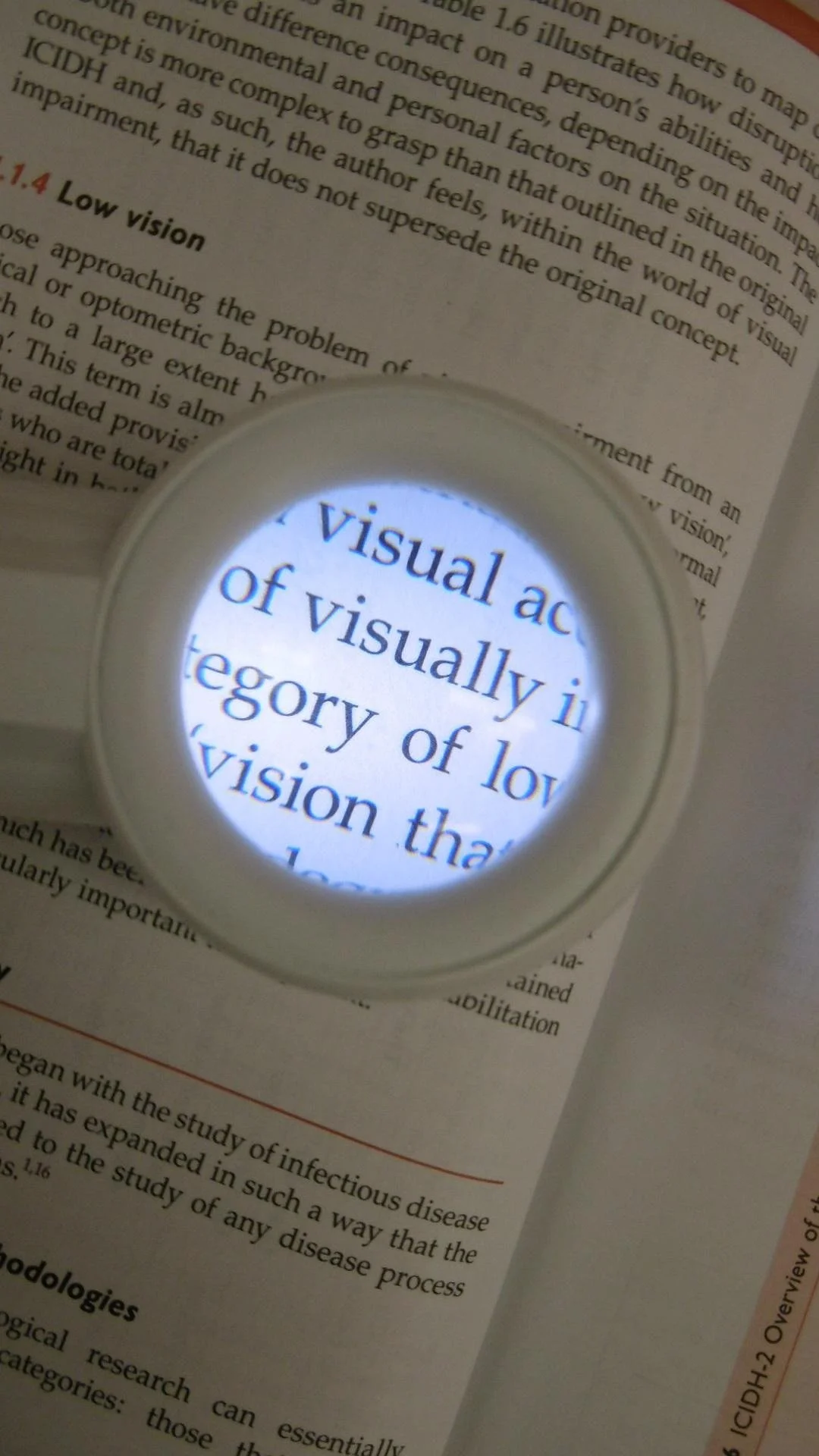
Services include the provision of low vision aids, equipment to help with problems of daily living, rehabilitation training to improve independent living skills and mobility skills, and information and advice on specialist services, employment issues, talking book services, special computer software, leisure activities and holidays.
An information leaflet is available which lists the organisations providing help, and the services that are available to adults and children with a sight loss.
To download a copy of the leaflet, go to: www.somersetsight.org.uk
-
Eye Clinic Liaison Officers are able to offer support, advice and information for anyone affected by sight loss. This can be immediately after diagnosis of an eye condition or at a later date or time to suit the person. ECLOs also provide support for ongoing eye conditions.
They are able to identify which services can best meet the individual needs of the person, for
example, they can provide advice on a range of matters including:
Living with sight loss and remaining independent
Details on latest aids and equipment
Benefits on concessions the person could be entitled to
Education, employment, housing and leisure
Eye conditions and treatment information
Emotional support
The advantages of certification and registration
An important part of their role is to inform people about the impact of sight loss and its effect on independence. ECLOs can offer visual awareness training to staff and advise them how the hospital environment can impact on people living with a visual impairment, as well as offering support to staff working with people who have a visual impairment.
If you have any queries re the above or would like further information please call Ceri Hudson, Eye Clinic Liaison Officer at Musgrove Park Hospital on 01823 344 155/07834 395 317 or Lesley Beevor, Eye Clinic Liaison Officer at Yeovil District Hospital on 07712 232 698.
-
Action for Blind People
14-16 Verney Road, London SE16 3DZ
Tel: 020 7635 4800
Website: www.actionforblindpeople.org.uk
AgeUK
Tavis House, 1-6 Tavistock Square, London, WC1H 9NA
Tel: 0800 1698787 or 0800 1696565.
Website: www.ageuk.org.uk
Association of Blind Asians
Room 16, Zenith House, 210 Church Road, Leyton E10 7JQ
Tel: 020 8558 6972
British Retinitis Pigmentosa Society
PO Box 350, Buckingham MK18 1GZ
Tel: 01280 860363 or 0845 123 354
Email: info@brps.org.uk
Website: www.brps.org.uk
Deafblind UK
National Centre for Deafblindness,
John & Lucille Van Geest Place, Cygnet Road, Hampton, Peterborough PE7 8FD
Tel: 01733 358100
Email: info@deafblind.org.uk
Website: www.deafblind.org.uk
Diabetes UK
10 Parkway, London NW1 7AA
Tel: 020 7424 1000
Email: info@diabetes.org.uk
Website: www.diabetes.org.uk
The International Glaucoma Association
15A Highpoint Business Village, Henwood, Ashford, Kent TN24 8DH
Tel 01233 648170
Email info@iga.org.uk
Website www.glaucoma-association.com
The Macular Disease Society
Darwin House, 13a Bridge St, Andover, Hampshire SP10 1BE
Tel: 01264 350551
Helpline: 0845 2412041
Email: info@maculardisease.org
Website: www.maculardisease.org.uk
Nystagmus Network (UK and Worldwide)
13 Tinsley Close, Claypole, Newark, Nottinghamshire NG23 5BS
Tel: 01636 627004 or 0845 634 2630
Email: info@nystagmusnet.org
Website: www.nystagmusnet.org
Organisation of Blind Afro-Caribbean’s
1st Floor, Gloucester House, 8, Camberwell New Road, London SE5 0RZ
Tel: 020 7735 3400
Email: info@obac.org.uk
Website: www.obac.org.uk
Partially Sighted Society
Queen’s Road, Doncaster, South Yorkshire DN1 2NX
Tel: 01302 323132
Email: doncaster@partsight.org.uk
Royal National Institute for the Blind
Customer Services Centre, PO Box 173, Peterborough, PE2 6WS
Tel: 0845 702 3153 (cost of local call)
Email: helpline@rnib.org.uk
Website: www.rnib.org.uk
Sense (National Association for Deaf-blind and Rubella Handicapped)
101 Pentonville Road, London N1 9LG
Tel: 0845 127 0060
Textphone: 0845 127 0062
Email: info@sense.org.uk
Website: www.sense.org.uk
Vision Support
Units 1 & 2, The Ropeworks, Whipcord Lane, Chester CH1 4DZ
Tel: 01244 381515
Website: www.visionsupport.org.uk
Complaints and feedback
NHS England is responsible for primary care. If you have a compliment, comment, complaint or concern about a GP practice, dental practice, optician or pharmacy you will need to contact either the individual practice or the NHS England Customer Contact Centre:
Tel: 0300 311 22 33
Mail: NHS England PO Box 16738 Redditch B979PT
Email: england.contactus@nhs.net
Patient Advice and Liaison Service (PALS) in Somerset
If you have a comment, concern or complaint about any other local health service please contact the Patient Advice and Liaison Service.
The PALS Service is there to help when you need advice, have concerns or don’t know where to turn.
As a patient, relative or carer, you may feel unable to raise your concerns or complaint directly with the staff providing the treatment. If this is the case, you can contact PALS for free, confidential help and advice
The service can help you to resolve any concerns that you may have about the care and treatment provided, at an early stage.
The service works with patients and staff to improve the health service.
They will do this by:
offering advice and support to patients, their families and carers
providing information on NHS services
listening and responding to concerns, suggestions or queries
helping sort out problems quickly on your behalf.
They will always ask for your permission before personal information is discussed with others. They can talk to staff, management and other organisations on your behalf. Only in exceptional cases where your safety or that of others must be considered will they have to pass on information. PALS will always tell you if they have to do this.
Their aim is to agree the best way forward to deal with a problem and get it resolved quickly – if possible on the spot.
Contact details
Write to PALS:
NHS Somerset Integrated Care Board
Freepost RRKL-XKSC-ACSG
Yeovil
Somerset
BA22 8HR
Telephone: 08000 851067
Email: somicb.pals@nhs.net
Please click here for further information.